The history of diamonds spans over 2,500 years, beginning in ancient India, where they were first discovered in riverbeds. India was the world’s only known source of diamonds until the 18th century. These gems were revered for their hardness, spiritual power, and royal appeal—often used in religious icons, medicine, and royal ornaments.
By the 1st century AD, diamonds entered Western markets through trade, reaching the Roman Empire. In the Middle Ages, they became symbols of strength and status among European royalty. However, it wasn’t until the Renaissance that diamond cutting techniques evolved, revealing their full brilliance. A pivotal moment came in 1477, when Archduke Maximilian of Austria gifted the first known diamond engagement ring, starting a tradition that still thrives today.
In 1725, Brazil became the new hub of diamond mining, replacing India. But the game-changing discovery happened in South Africa in 1866, leading to a diamond rush. This marked the rise of large-scale mining and the creation of De Beers, which dominated the diamond industry throughout the 20th century.
The famous slogan “A Diamond is Forever”, Coined by Frances Gerety in 1948, emphasizes the perceived durability and value of diamonds and forever linked diamonds with eternal love, transforming them into the symbol of love and commitment worldwide.
In the 21st century, ethical sourcing became a major focus. The Kimberley Process was established to prevent the trade of conflict diamonds, while lab-grown diamonds emerged as a sustainable, conflict-free alternative.
From ancient spirituality to modern luxury, diamonds have retained their allure across centuries. Their journey from India’s rivers to global showcases is a testament to their timeless brilliance and evolving legacy.
Diamond mining is the process of extracting one of Earth’s most coveted natural resources—diamonds. Formed deep within the Earth’s mantle under extreme pressure and heat, diamonds reach the surface through volcanic eruptions and are found in specific geological formations known as kimberlite pipes or alluvial deposits.
There are two main types of diamond mining: primary and secondary. Primary mining involves extracting diamonds directly from kimberlite or lamproite pipes, typically using open-pit or underground mining methods. Open-pit mining is used when diamonds are close to the surface, while underground mining is necessary when they are buried deep beneath the Earth.
Secondary mining, also called alluvial mining, focuses on diamonds that have been washed away from their original source and deposited in riverbeds, beaches, or seabeds. Alluvial mining is less invasive and often done using simple tools or dredging techniques.
Some of the world's top diamond-producing countries include Russia, Botswana, Canada, Angola, and South Africa. These regions possess rich kimberlite reserves and have developed advanced mining infrastructure. Historically, India and Brazil also played key roles in early diamond mining history.
Modern diamond mining faces scrutiny over its environmental impact and ethical practices. Open-pit mining can disturb ecosystems, while underground operations consume large energy resources. To counter these issues, many companies now follow sustainable mining practices and comply with regulations like the Kimberley Process, which helps prevent the trade of conflict diamonds.
Additionally, the rise of lab-grown diamonds has sparked a shift toward more eco-conscious alternatives, although natural diamond mining remains a vital industry for many economies.
With advancements in technology and growing awareness about sustainability, the future of diamond mining lies in striking a balance between resource extraction and environmental responsibility. Innovations in tracking, automation, and green mining are reshaping how we source the world’s most precious gem.


The world of diamonds is a captivating realm that combines natural wonder, luxury, craftsmanship, and enduring value. Born deep within the Earth’s mantle, diamonds are formed under extreme pressure and heat, making them not only the hardest natural substance but also one of the most sought-after gemstones in human history.
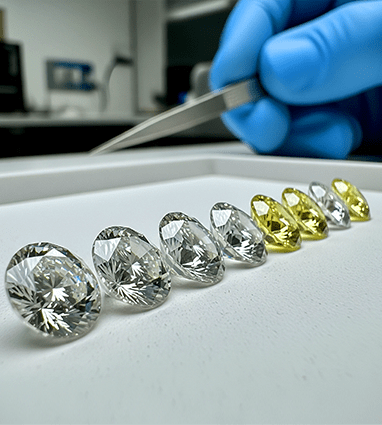
When it comes to buying a diamond—whether for an engagement ring, investment, or personal collection—understanding the 4Cs of diamonds is essential. These four characteristics - Cut, Color, Clarity, and Carat Weight - are the universal standards for evaluating a diamond's quality and value. Developed by the Gemological Institute of America (GIA), the 4Cs help both jewelers and consumers determine a diamond’s worth and beauty.
Each of the 4Cs of diamonds plays a vital role in determining a diamond’s quality, appearance, and value. However, the perfect diamond is not necessarily the highest in every category. Instead, it’s about finding the right balance that suits your style, budget, and occasion.
For example:
When shopping for a diamond, always request a certification from a reputable gemological lab (like GIA or IGI) and compare diamonds side-by-side to find the best combination of characteristics.
Understanding the 4Cs of diamonds -Cut, Color, Clarity, and Carat Weight empowers you to choose a diamond that’s not just beautiful, but smartly purchased. Whether you're buying a diamond engagement ring, a gift, or an investment piece, the 4Cs give you the confidence to evaluate quality and make a meaningful choice.